|
We flew down from Auckland or various other parts of the country to arrive in Dunedin on 29 December,
and after picking up our rental van from the airport we checked into the Chalet Backpackers BBH hostel,
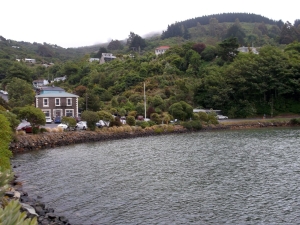
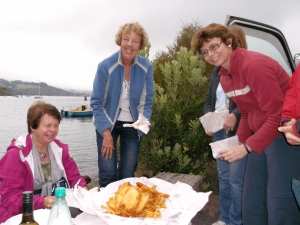
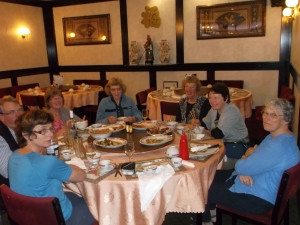
just a short walk from the Octagon. That evening we went out to Port Chalmers and enjoyed a yummy meal
of fish and chips.
|
|
|
|
|
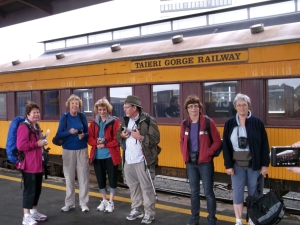
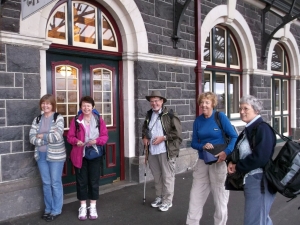
The next day we went on the Taieri Gorge Railway train to Middlemarch. The train left the Dunedin
station and raced across the plains to the spectacular Taieri Gorge. There were plenty of tunnels, bridges
and viaducts to go through or cross. We had a brief stop near a house whose access was from the railway
only; there were no roads in the area. We went as far as Middlemarch before returning to Dunedin.
|
|
|
|
|
The following morning dawned beautiful and sunny, ideal for a drive out to the Otago Peninsula. We
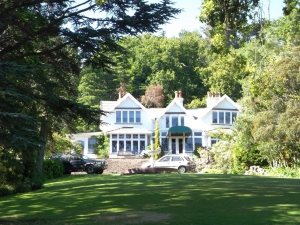
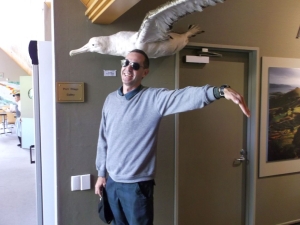
had a look at the Glenfalloch gardens before carrying on to the albatross colony at Taiaroa Head. There
were wartime fortifications and tunnels to be seen, including a disappearing gun built in 1886 for a
possible Russian attack.
|
|
|
|
|
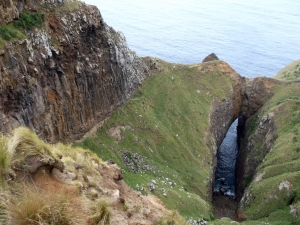
We went on to Ellens Beach for a beach walk before doing the Sandy Mount Walkway where we could see
the chasm beside Lovers Leap.
|
|
|
|
|
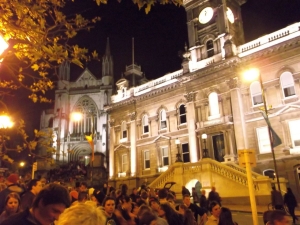
Our group celebrated New Year by dining out at a restaurant before going into the Octagon and viewing
the fireworks as Auld Lang Syne welcomed in 2013.
|
|
|
|
|
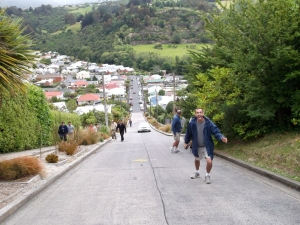
We marked the first day of 2013 by visiting Baldwin St, said to be the steepest street in the world
with a gradient of 1 in 2.56. A local man was seen to do his daily exercise routine by going up and down
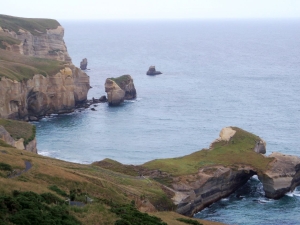
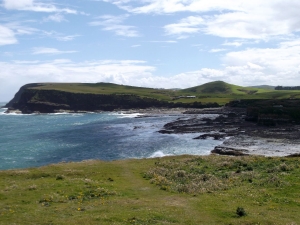
this several times. Afterwards we went to Tunnel Beach, accessed at low tide by a man-made tunnel dating
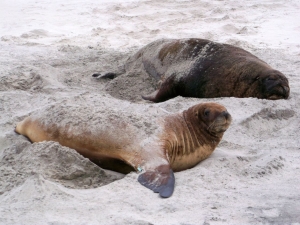
from 1870. The rocks showed some amazing colours. That evening we went out to Nugget Point to see the
seals on the rocks, and yellow-eyed penguins drying off after theiur day in the water before retiring
to their nests for the night.
|
|
|
|
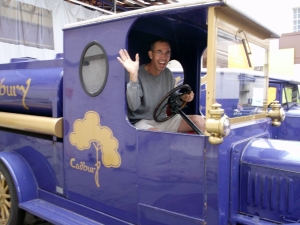
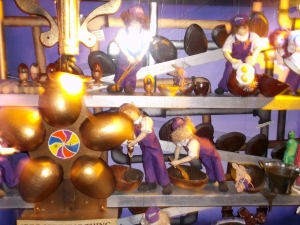
The Cadbury chocolate factory was well worth a visit. Unfortunately taking photos inside the factory
itself was strictly taboo - all cameras, bags, cellphones and jewellery had to be minded in secure lockers,
and we were given hair nets and beard covers to wear. We could see the chocolate being made and moulded
into the various Cadbury products. There was plenty to see and take photos of outside the actual factory.
|
|
|
|
|
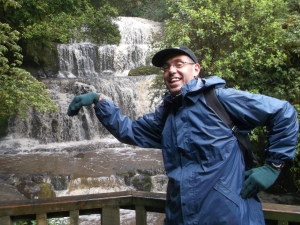
Our tour of the Catlins began with Pounawea, where we went on a walk through farm and bush. We went
on to Owaka and checked into a backpacker hostel, and Andrew enjoyed a massage from a foreign lady who
was staying there. There was plenty to see in the Catlins - the Pain Falls, plenty of native trees, manuka
trees in full flower.
|
|
|
|
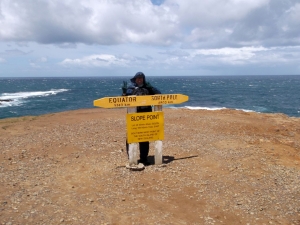
We did a walk to Slope Point, the southernmost point of the South Island, and had to put up with
a fierce wind. Curio Bay was very interesting - there was a forest that had been fossilised by volcanic
activity. Petrified tree trunks and branches were seen both in their original standing position and fallen
to the ground. Close to Curio Bay was Porpoise Bay where we could see the Hectors dolphins coming in.
some of the trees were amazing - there was discussion as to whether some of the trees were rata trees.
Our Catlins tour finished with Kaka Point. At this point Eileen left to go back to Auckland.
|
|
|
|
|
It was now time to head inland to have a look at the central Otago goldfields. From Balclutha we
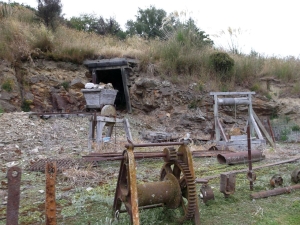
went to Lawrence which we found was not a good place to buy a coffee. The first of our goldfield walks
was at Gabriels Gully near Lawrence. There were plenty of amazing plants to seem as well as relics form
the gold mining days, as we did a two hour walk on a sweltering hot afternoon.
|
|
|
|
|
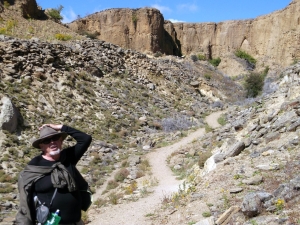
We carried on to Roxburgh where we did the 1½ hour 4km Grovers Hill walk. This went up to the top
of the hill before going around it to follow the bank of the Clutha River.
|
|
|
|
|
The final week of our trip was based at the Alexandra Holiday park, where we had a house named Matti
to ourselves. This unit had four bunkrooms, and a spacious lounge and dining area with kitchen.
We
did a walk on the Doctors Point walkway long the Clutha River southwards from Alexandra. There were plenty
of goldmining relics to be seen, and a most amazing fragrance of wild thyme in the air. We could see
across the river a new cycle trail being built. When we reached Butchers Point we decided to turn back,
as the track became more rough past this point.
|
|
|
|
|
Next day we went to Bannockburn near Cromwell. As we walked around this goldfields reserve we learned
about the tough life the miners had to endure, and the fantastic ingenuity shown in where to find the
gold.
|
|
|
|
|
That night John joined up with group, having had Christmas in Tauranga and done several things on
the way including driving a golf cart on the old railway from Taumarunui to Stratford, walking through
part of Tully Reserve at Paraparaumu, visiting Somes Island in Wellington Harbour, and seeing the sorry
sights of the Christchurch Red Zone on a bus tour.
While in Alexandra we would have devotions
at our unit after dinner, taken by Beulah, a Bible teacher. She was sharing about lesser-known friends
of Paul mentioned in the book of Acts and his letters, and this time she chose Nympha. Nympha had opened
up her home and let the church meet there, helping to spread the gospel of Jesus Christ in a hostile
environment. God had timed the coming of Jesus to when the Romans had built roads to allow the spreading
of the gospel. Barriers between rich and poor were broken down in Nympha’s home.
The following
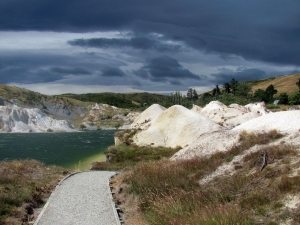
day, Wed 9 Jan, we focussed on the Maniatoto region. Our first port of call was St Bathans where we were
greeted by a cold howling wind. We did the Blue Lake loop track at the south side of the lake. This was
a spectacular 2km walk with views of the lake and going past old sluicings and the remnants of the goldmining
equipment that was used here - machinery that literally converted Kildare Hill into a lake. After visiting
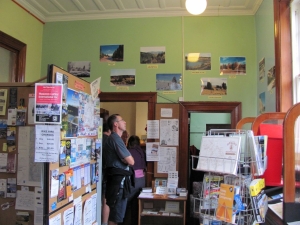
the historic Vulcan Hotel drinking clinic, we went on to Naseby intending to do a walk in the Naseby
Forest. However the heavens opened up, and we ended up having a look at the old post office and the museum,
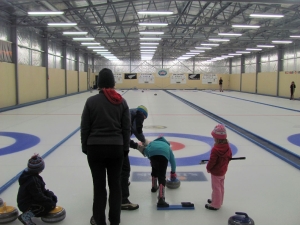
and also had a look at an indoor curling rink. This sport is popular in Central Otago especially in winter
when lakes and ponds get frozen over. It is a form of bowls using 20kg weights or “rocks” on an ice surface.
Sweeping the ice with a broom ahead of the rock allows the rock to travel a bit faster. he weather cleared
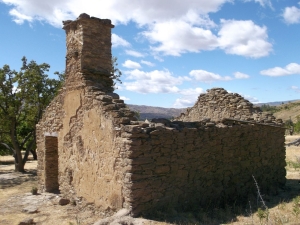
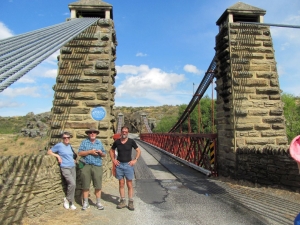
as we went through Omakau to have a look at the historic township of Ophir. We parked across the historic
Ophir bridge, and walked back to have a look at the old post office, jail, courthouse and cottages.
|
|
|
|
|
That night after dinner Beulah told us about Jason. Paul went to the synagogues to preach Christ
to the Jews, and after three Sabbaths (Saturdays) the Jews kicked them out. Jason became a believer as
a result, and opened up his home to teach and nurture fellow believers and provide refuge for Paul, Silas
and Timothy. Paul had shown people how to bring others into God’s kingdom by showing love. The number
of believers in Thessalonica grew quickly. Jason was arrested when the authorities could locate neither
Paul nor Silas, and was made to post bail.
We had a go at the Millennium Walkway between Clyde
and Alexandra next day, splitting into two groups with the van left at Clyde and drivers swapping keys
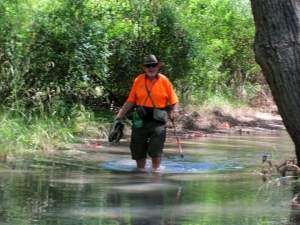
when the groups crossed. The group walking from Alexandra soon found the track was flooded by the Clutha
River swollen by the previous day’s heavy rains in the Otago catchments. They were having to wade up
to thigh deep and were forced to abandon the track and follow the roads. Andrew sent text messages to
the other group, who started at Clyde and found the track straightforward so far. The two groups met
up at McPherson Rd outside the driveway to the winery at 11:25am. The other group carried on and when
they rejoined the walkway near Alexandra they found themselves wading up to their knees in places.
|
|
|
|
|
For devotions that evening Beulah chose the theme of man and woman, and this turned into an interesting
one hour Bible study. All people are equal in Christ regardless of gender (Galatians 3:28), man and
woman are not independent of each other (I Corinthians 11:11-12) and God created humans in His own
image, male and female (Genesis 1:27). In the Old Testament Miriam was a prophetess and a church co-leader,
Deborah was a married woman and prophet, and Huldah was a prophet. Only men were priests. In the New
Testament we are all priests under Jesus Christ, who is the only priest between God and humans. Acts
2:17-18 (story of Pentecost) Your sons and daughters will prophesy. When Jesus was growing up He took
advice and instructions from his mother Mary. Romans 16 has a long list of female leaders.
Next
day, Friday 11, we went to the Bendigo Goldfields Reserve, off the Cromwell-Tarras highway, and parked
at the site of what was once Logantown. Two choices were offered for the day’s tramping - Alex, Andrew,
Barbara, June, and Katherine did the longer Kanuka Loop Track while Charlie, Joy, Beulah, and John opted
for an easier option exploring some of the relics from the gold mining days. There were plenty of mining
relics to see, including shafts, cottages and the remains of the Pengally Hotel, a favourite drinking
clinic for the gold miners.
|
|
|
|
|
For our devotions that night Beulah spoke on husbands and wives, again a discussion-provoking hour-long
Bible study. She said that before she was widowed she had made decisions together with her husband, but
in many situations the wife has to make an independent decision. In Ephesians 5:21-33 husbands and
wives need to work together, submit to each other and act self-sacrificially. Afterwards John went on
a twilight walk and noticed the river level had dropped considerably. When he returned an hour later
Alex was still discussing issues of husbands and wives with Beulah.
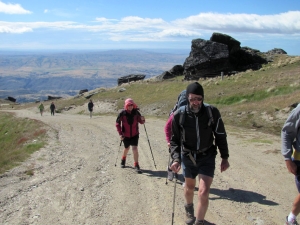
Our final full day was a
trip up the Old Man Range. It was a challenge for Charlie at the wheel as we climbed the Old Man Range
along a clay road through the Obelisk sheep station. We made it to 394m asl, about ¾ way up the range,
at 10:15am before parking the van and donning jumpers and wind jackets to brave the fierce cold wind.
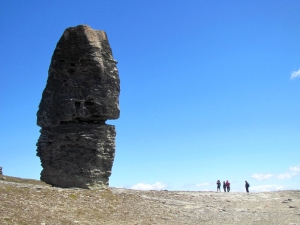
It was rather a long slog as we continued on foot up to the junction on the summit ridge. We reached
the junction after 45 minutes for a break and look around, then we carried on to the Obelisk (a tall
rock outcrop) in just 45 minutes, passing numerous smaller outcrops on the way. We arrived at the summit
about 12 noon, and had a look at the view. We left the Obelisk returning the way we came, and with a
tail wind most of the way made it to the van at 1:10pm. The van was a welcome shelter to have our lunch,
after which we drove down the range, and stopped for a coffee at Speargrass Inn before returning to Alexandra.
|
|
|
|
|
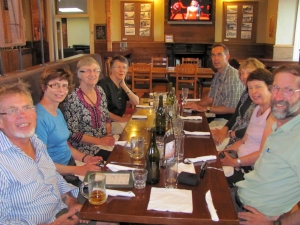
We had our end-of-trip dinner at Monteiths restaurant. There was a wide choice of dishes to choose
from for mains and desserts. We had been invited to write on cards for Barbara to thank her for all her
hard work, and for Andrew having a birthday in two days’ time, and these were presented to them. Barbara
told us how she really appreciated being together with people she knew and exploring an interesting part
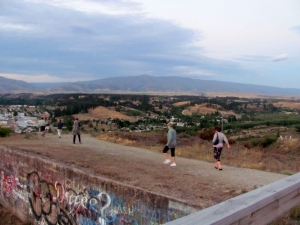
of the country. Afterwards we drove up to the lookout above the big clock to get views of Alexandra in
the pleasant cloudy twilight weather, no indication of what we would have next morning.
|
|
|
|
|
On Sunday 13 we were all up by 6am to the music of heavy rain and thunder, most of us having
almost completely packed our bags the night before. At 7am Andrew took Alex, Charlie, Beulah and Katherine
to Clyde to meet up with the group who would be cycling the Central Otago Rail Trail before returning
to take the rest of us to Dunedin Airport. The rain and thunder had given way to dry weather as soon
as we reached Roxburgh.
|
|
|