|
 |
This was a trip with a difference - instead of being a tramp or long walk, this was more of a field
trip focussing on fungi with Dr Peter Buchanan from Landcare Research. The Club has done two such trips
previously with Peter, in 1997 and 2002, at locations in the Waitakere Ranges. This year we had an unusually
dry summer and autumn, so the fungi would not be out as much as would be expected at this time. So Peter
decided on the more local Kauri Glen Reserve in Northcote. We had 13 people in total.
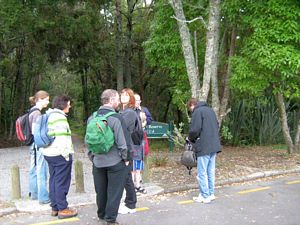
We left
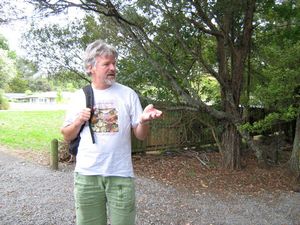
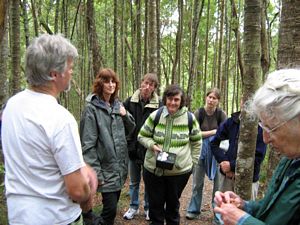
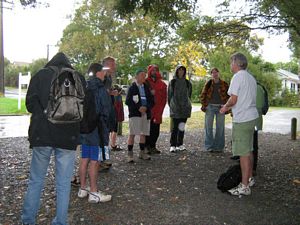
The Bracken soon after 1:30pm and met up with Leo at Kauri Glen. Peter, dressed in a Systematic Biology
T-shirt with pictures of mushrooms and other fungi, gave an introduction before we entered the native
bush reserve.
|
|
|
|
|
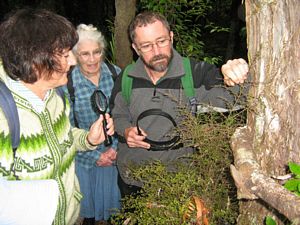
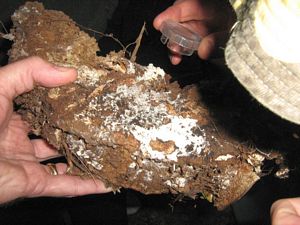
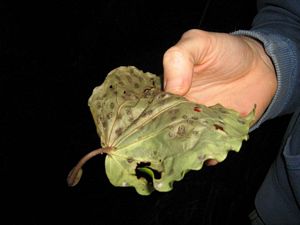
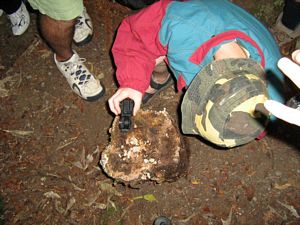
We fossicked for fungi in the bush beside the tracks as we worked our way down the gully, crossing
the Waiurutoa Stream and climbing up to Tui Glen Rd. Peter shared all sorts of interesting facts about
fungi including such things as:
A mushroom (toadstool) is the reproductive part, or “flower”, of
a larger and not-so-visible fungus that exists in the ground.
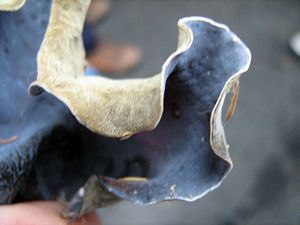
The ear fungus is often used for cooking
in Asian countries.
Bracket fungi are woody and show annual growth rings.
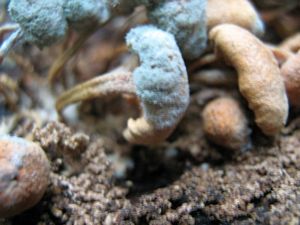
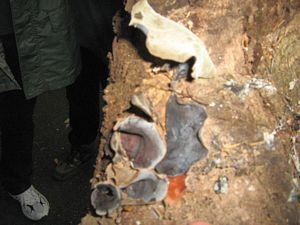
Some fungi grow on rotting
fungi as well as rotting wood.
Fungi are a vital component in the ecosytems of living things.
A
lichen is part fungus and part plant.
Fungi are related more closely to animals than plants for fungi
require oxygen and do not manufacture food.
Fungi are the World’s decomposers and they are nutrient
cycling. NZ has 7000 identified fungi and there may be 20000 judging identification in other countries.
Have you noticed the fungi on the $50 note? [entoloma hochstetteri].
Fungi reproduce sexually
and asexually with the spreading of spores. In sexual reproduction the chances of cross fertilisation
are slim and so millions of spores have to be produced to maximise the chances of spores meeting. The
gills are vertical for spore dispersal and if a fruiting fungus is moved it will change the direction
of growth to vertical.
Fungi are used in medicine and detergents and commonly in bread, beer and athletes
foot.
Many plant diseases are caused by fungi.
A person who eats the death-cap mushroom falls
sick, appears to improve after three days, but dies on the fifth day.
|
|
|
|
|
|
|
|
|
|
|
|
|
|
We returned the same way, and had a final discussion back at the carpark under the shelter of
the bush from liquid sunshine that was setting in. This brought to a close an informative time and a
greater appreciation of what is really in the bush around us as we tramp.
|
|
 |
|
|
|