|
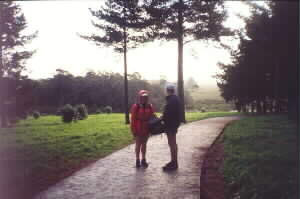
Eleven people chose not to be bothered with a showery Sunday morning and turned up - two at The Bracken
and the rest at Entry 4 of Unitec on Carrington Rd - just as the sun was coming out for the afternoon,
to explore some interesting places on the Unitec campus and the Oakley Creek Walkway.
|
|
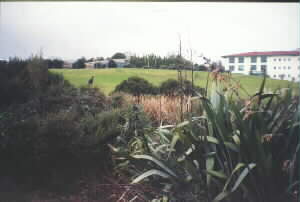
We set out about 2:15pm and had a look at a couple of ponds that had been made in Unitec’s spacious grounds
as a conservation project. Originally there was just a stream running through, catching stormwater from
the surrounding urban catchment. The ponds were created to allow the stream water to slow down and let
the impurities - particles of dirt, grime, etc - settle on the bed of the pond, and thus make the water
much cleaner. Also, the ponds have become a habitat for birdlife such as pukekos and ducks.
|
|
 |
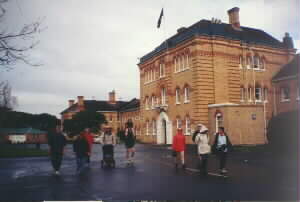
From there we went out onto Carrington Rd and followed it to Entry 1, then had a wander around what
was once the Oakley Mental Hospital, nicknamed the “loony bin” in its heyday. In the late 1980s/early
1990s Oakley was renamed Carrington Hospital, and later vacated by the hospital board and transferred
to Carrington Polytech (now Unitec) - in the early days sick brains were treated; nowadays young healthy
brains are treated in the building for careers in architecture and design. Treatments at Oakley in the
“old days”, like most psychiatric hospitals at the time, included the infamous electric shock therapy
where patients were given severe electric shocks through their heads while under anaesthetic, and paraldehyde
which felt like an injection of molten lead which slowed the patient down so much that he would shuffle
around instead of walk. This shuffle became known as the “Oakley shuffle”. Nowadays patients are treated
with medications, discussion group therapy and doing various types of work.
|
|
|
|
As we walked along the long driveway towards the old M3 block, we had a view of Mason Clinic, where
patients committed by the courts are sent to. We then passed the horticulture fields and stopped to see
Vera, Unitec’s newest employee. Her job as a vertical compost processor standing about five metres high
is to turn garden waste, organic material and food scraps into compost - she was designed at Unitec and
works quietly 24 hours each day, seven days a week, at her special job.
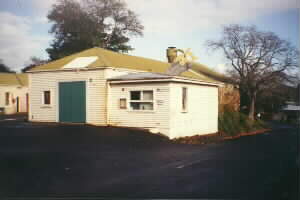
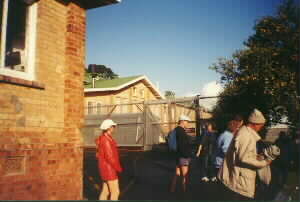
We came to the former
M3, or Male 3, block that in Oakley’s days housed the hospital’s most dangerous patients. Staff working
there would need to be physically strong and able to handle the stresses of people who could get violent
at any time. Today’s staff in the block do not need the physical requirements, just the ability to play
their part in training young people in the area of applied art and design.
|
|
 |
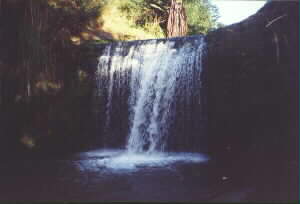
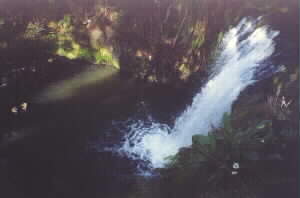
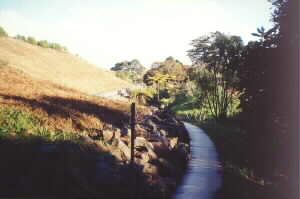
From there we followed a path into the Oakley Creek gully and glimpsed a pretty secluded waterfall.
Not many people know of this waterfall being so close to two of Auckland’s busiest roads, Great North
Rd and the northwestern motorway. We were able to go down to the bottom of the 3-metre falls before carrying
along the track beside the stream above the waterfall.
|
|
|
|
This eventually came out to Great South Road, which we crossed over to visit Heron Park, a new park that
is being developed by the Auckland City Council. Here we had the choice of a walk through the park or
to go straight back to the carpark at Unitec via the Phyllis St sports grounds and back streets, as some
of the group wanted to hurry back home for other arrangements later in the day. Only John, David and
Lourinda did the short loop walk through Heron Park, which included a lovely plantation of macrocarpa
pines, and even they were back at the car park before 4pm.
|
|
|
|
|
|
|