|
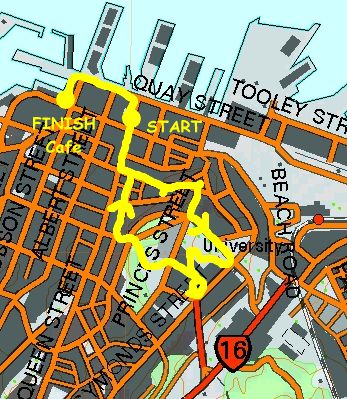
Base map: NZTopoOnline, extracted May 2004, Crown Copyright Reserved
|
A Sunday afternoon walk with a difference - a tour of part of the central city of Auckland looking at
its history. Joy did an excellent job as guide, following Walk 2 - Original Auckland in David Palmer’s
book Walking Historic Auckland. The weather was excellent as well, with not a cloud in sight.
We
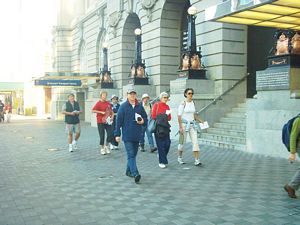
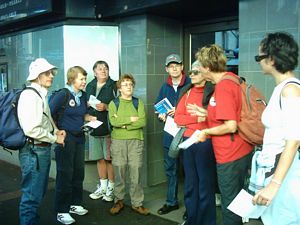
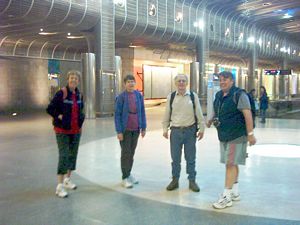
set out from outside the former CPO, now Britomart Railway Station, with our first stop on the corner
of Queen and Shortland Sts near the pie cart. This was the foreshore back in the 1840s when Auckland
was founded; at low tide immigrants would have to slog across a mudflat extending to where the ferry
building now is, lugging babies, toddlers and baggage. Shortland St was Auckland’s original main street
with various shops and about the same number of grog shops or drinking clinics.
|
|
|
|
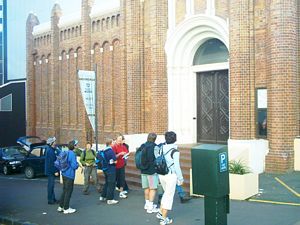
Up Shortland St we went, to no 74, a seemingly windowless brick building that was the original home
of 1YA, New Zealand’s first licensed radio station. In 1960 the building hosted New Zealand’s first television
station AKTV2. Three years ago the University of Auckland took over the building for SCAPA, its school
of performing arts.
|
|
 |
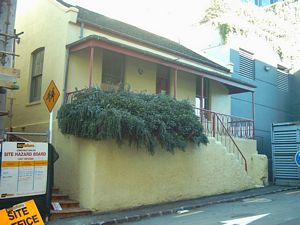
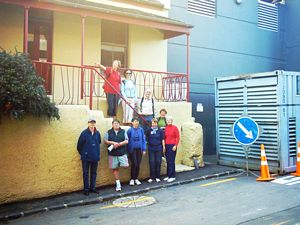
Joy asked us to go up Bankside St opposite the former broadcasting station, and see if we could find
any relics of the past. John spotted a small concrete cottage - this dates back to 1884, 120 years ago.
|
|
|
|
|
We returned to Shortland St and stopped at the Emily Place reserve, site of the original St
Paul’s Church before Britomart Point was quarried to reclaim the area containing Quay St and the wharves.
|
|
|
|
|
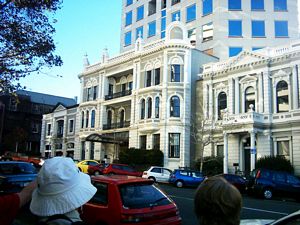
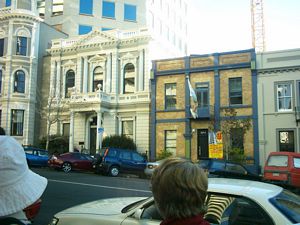
The right-hand side of Princes St above Emily Place displayed a row of fine old buildings, including
the Freemasons Hall and the Grand Hotel where celebrities such as Noel Coward and the Mountbattens demanded
such luxuries as a heated toilet seat.
|
|
|
|
|
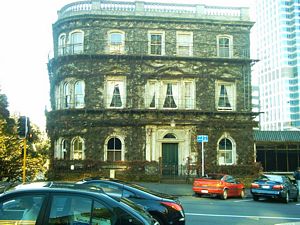
The creeper-coated Northern Club was originally the Royal Hotel, built in 1867 to replace a
wooden building on the same site. The Royal Hotel was Auckland’s first drinking clinic, opened in 1840
by a 23yo runaway sailor in a wrecked sailing ship hauled ashore
|
|
 |
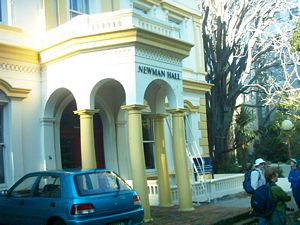
We stopped halfway down Waterloo Quadrant to look at Newman Hall, built in 1863 as a mansion; a hundred
years later Catholic students attending university boarded there.
|
|
 |
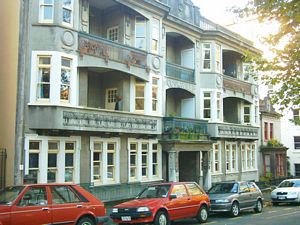
Further down, we saw the elegant Courtville flats.
|
|
 |
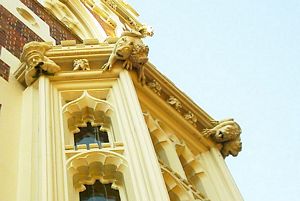
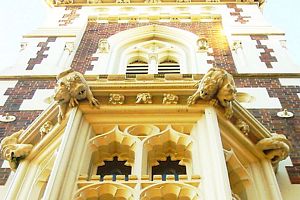
The original church-like Supreme Court building is home to the High Court. The average person links
this building with judges, juries and prison sentences; very few people notice the rather amusing caricatures
carved into the stone facades, the result of the irreverent work of a 26yo immigrant from Prussia in
the late 1860s.
|
|
|
|
|
|
|
|
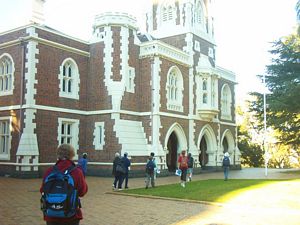
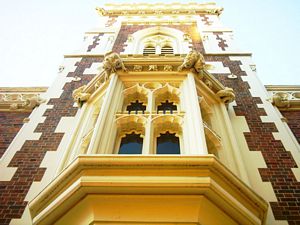
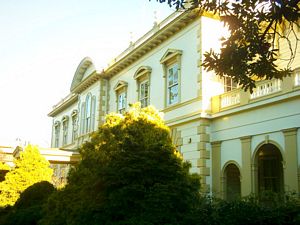
We went on into the university grounds to see the old Government House built in 1856, serving
its purpose till 1969 when the University of Auckland took it over as common rooms for its senior staff.
|
|
 |
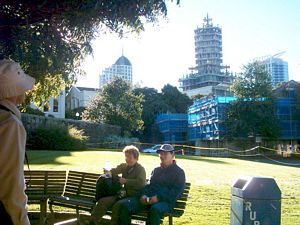
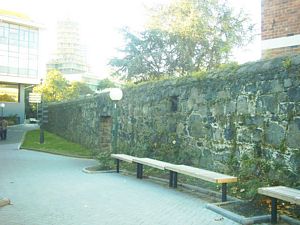
Our afternoon tea break was beside the old Albert Barracks wall within the university campus. The
landmark clock tower of the varsity was covered in scaffolding for a grand clean-up operation.
|
|
|
|
|
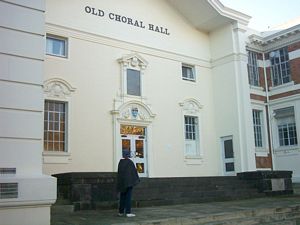
We went around the corner to view the old Choral Hall that would host concerts by the Auckland Choral
Society as well as serve as the town hall before the present town hall was built in 1911.
|
|
 |
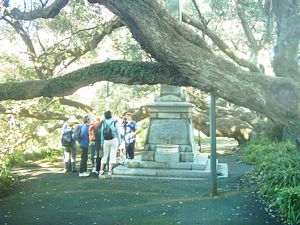
Our final point of interest was the Queen Victoria statue in Albert Park, built in 1899
|
|
 |
We crossed Albert Park and returned to Britomart, going down into the underground railway station
devoid of trains - the only trains that use the station on Sundays are the Auckland-Wellington expresses.
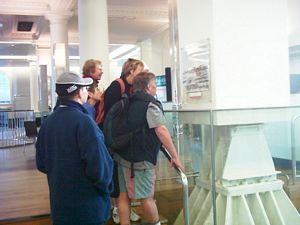
Back upstairs, we had a look at some photos of old Auckland on display.
|
|
|
|
|
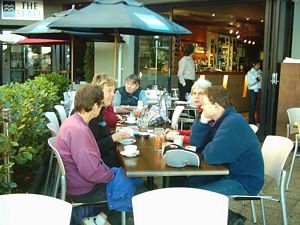
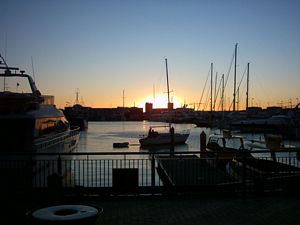
Our post-walk cafe stop was at Viaduct Harbour. At 5:14pm the sun went down over the viaduct
basin to conclude a very informative afternoon.
|
|
|
|
|
|